TV

Back in the 1950s when TV was still young, all you needed to get content was an antenna.  You put up your antenna and connected it to your TV set, and voila! TV shows appear on the channel you select.  It was magic, and the only cost for getting these TV shows was the cost of the antenna and the TV set.  The ads that accompanied the TV shows as well as the endorsements put out during the shows paid for the service.   One immediately thinks of Wheaties, the Breakfast of Champions, or Dinah Shore belting out: “See the USA in your Chevrolet.”  And you got it all for free — what a miracle!

Today, you don’t get TV content for free anymore, but the ads are still there.  Think about that for a moment.  In effect, you are paying to watch ads that you don’t really want to watch, and the ads are interfering with what you do want to watch.  Ad money still underwrites the service, but, in addition to that, you are also paying for the service — a double whammy, no magic here.

It is true that some programming is now ad free.  And how much more enjoyable is it to watch a full-length movie without constant interruptions by annoying ads — a lot!  But shouldn’t all content paid for directly by the consumer getting it be ad free?

What do you get for a one dollar contribution? My gratitude.

If you enjoyed the post, you can help me keeping blogging along with just a one dollar contribution. You can contribute more by increasing the quantity — each increase by 1 is an additional dollar. Thanks for your support in this blog-eat-blog world.

$1.00


North Korea — What to Expect

It is hard to see what direction Secretary of State Pompeo will take negotiating with North Korea.  I say this because the ultimate objective for the United States is for North Korea to denuclearize, but having nuclear weapons is really the only card North Korea has to play.  So why would they give them up?   They wouldn’t.

If they do give up their only winning card, the question remains, how would North Korea be protected from a US attack, which is what they really fear?  A treaty could be arranged so that Russia or China, even Russian and China, would guarantee the North Korea borders from attack — that if North Korea were attacked by anyone, one or both would come to their aid.  But why would North Korea trust such an agreement, as it would put one or both of these countries at odds with the United States without much to gain from it themselves?

Furthermore,  everyone is keenly aware of what happened in Libya.  The United States negotiated with Muammar Gaddafi to back away from having nuclear weapons.  He agreed, but subsequently the United States became very involved in his overthrow.  Remember the once all-powerful Gaddafi hiding in a storm drain, and then slaughtered by his angry captors?  That lesson of how vulnerable a country and its leader are without having the ultimate weapon was not lost on Kim Yong-Un or anyone else.  So that the United States might guarantee the North Korean borders if the regime agrees to denuclearize — all of that rings kind of hollow in this light.

Consequently, I see the basic negotiation of denuclearizing North Korea going nowhere.  But does that mean there is no benefit from further negotiation?  Here there is some hope, for there is a subtle benefit that is realistic and achievable.

North Korea and South Korea are technically still at war.  What was signed way back in 1953 was an armistice, not a treaty that ended the war.  So technically they are still at war.  In fact, up until recently, the tension in the demilitarized zone was palpable and very threatening.  The two sides down through the years have shown recurring bouts of open hostility, including an active series of “war games” with American participation in South Korea and unrelenting warlike broadcasts by North Korea.

It could very well be the case that some wars are not started from a sudden decision, but rather a series of small steps and irritations that slowly lead to a crescendo of outrage on either side, so that the slightest spark reaches — to use a nuclear metaphor — critical mass,  and so you have an explosion of outright hostilities.  You have yourself a war.  This was certainly the case in World War 1 where the spark was the assassination of  Archduke Franz Ferdinand of Austria.  Just imagine — an entire world set ablaze because just one person is shot dead.

But it might be that peace works in the opposite direction — a series of small steps at forgiveness and reconciliation until the parties involved become surprised at and even taken aback by any animosity, so that the thought of war seems preposterous, remote.  That first step toward peace in this case might be a much ballyhooed peace treaty that finally ends the war between North Korea and South Korea.  That’s the achievable benefit.  It would in fact change little about the current circumstances, but it would change the mood dramatically, and would be that tiny but real first step away from war, away from the abyss.  A journey of a 100 miles begins with the first step.

But, unfortunately, there is further reason for pessimism about the Korean predicament.  It has to do with the prospects for the country to become unified again.  What you have in South Korea is a Western-style democracy and a capitalist society.  It is a wealthy, industrious, and innovative country with its citizens used to quite a bit of personal freedom as well as civil rights and voting rights.  In short, the people are independent, well to do, and exercise a good deal of self-determination in the conduct of their own lives.

Contrast all of that to what exists in North Korea.  North Korea is a hereditary military dictatorship based on the cult of a supreme leader.   It is a poor country that is barely able to feed itself.  We’ve all seen the satellite night photographs of a pitch black North Korea.  Much of the country’s productive capacity is spent on developing an overly massive military or wasted by the regime for showy propaganda structures that serve no useful benefit for its society.  Its people have no rights and have been thoroughly indoctrinated in a Stalinist-like regime where individuals who voice the slightest disagreement with the regime simply disappear, either permanently or to Gulag-like prisons.  So there is no dissent to speak of, and the people are like robots in their total submission to the state and its supreme leader.  I submit that two such disparate regimes will never ever be reconciled, certainly not without a lot of bloodshed and civil war.

It’s interesting to sit back and look at the Korean situation from the point of view of what would be the worst case scenario from the American perspective and from the North Korean perspective.  The American perspective is pretty easy to understand.  We would not want to see South Korea overrun by North Korea.  This could happen in either of two ways.  The United States might negotiate to leave South Korea if there was sufficient guarantees that North Korea would not invade.  But the United States having left, North Korea might renege on this agreement and invade anyway.  Alternatively, an outright war could break out.  Seoul would be destroyed by the artillery bombardment, the tactical nuclear weapons used by the United States might not be effective in deterring the million-man North Korean army that invades South Korea, and so the whole peninsula, or what’s left of it, would fall to North Korea.  In either of these possibilities, the net result would then place Japan at severe risk — the next domino to fall.  And there is also the outside chance of a North Korean nuclear-armed missile managing to hit American soil.  That’s the American nightmare.

The North Korean worse case scenario is pretty obvious.  The United States military always has its “hawks” recommending that now is the time to take advantage of the enemy — that any further delay is to our disadvantage.  The hawks are always there pressing this argument in every international conflict.  After all, fighting and killing are what they do.   Actually, in this case, the hawk argument, that time is not on our side, is not a hard one to make.  North Korea today probably does not have the reentry technology or the accuracy to hit specific targets in the continental United States, but in 5 years?  Today it is estimated they may have 15 nuclear weapons, but in 5 years?  The clock is ticking.

Nevertheless, should the perception unfold that the North Korean regime is consciously trying to play us along in order to deceive the United States to gain the upper hand in a game of nuclear chicken, such a growing perception would play into the hands of the hawks who would merely reiterate that time is running out on our advantage to ATTACK.  The worse case scenario for North Koreans unfolds when leadership in Washington becomes persuaded by this argument and ultimately agrees with it.  If that synergy between Washington and the hawks were to happen, all of North Korea would hang by a nuclear thread hovering above an annihilation one can scarcely imagine.

Crimea

Nuclear Winter

European Union (EU) and Tariffs

What do you get for a one dollar contribution? My gratitude.

If you enjoyed the post, you can help me keeping blogging along with just a one dollar contribution. You can contribute more by increasing the quantity — each increase by 1 is an additional dollar. Thanks for your support in this blog-eat-blog world.

$1.00

My Story

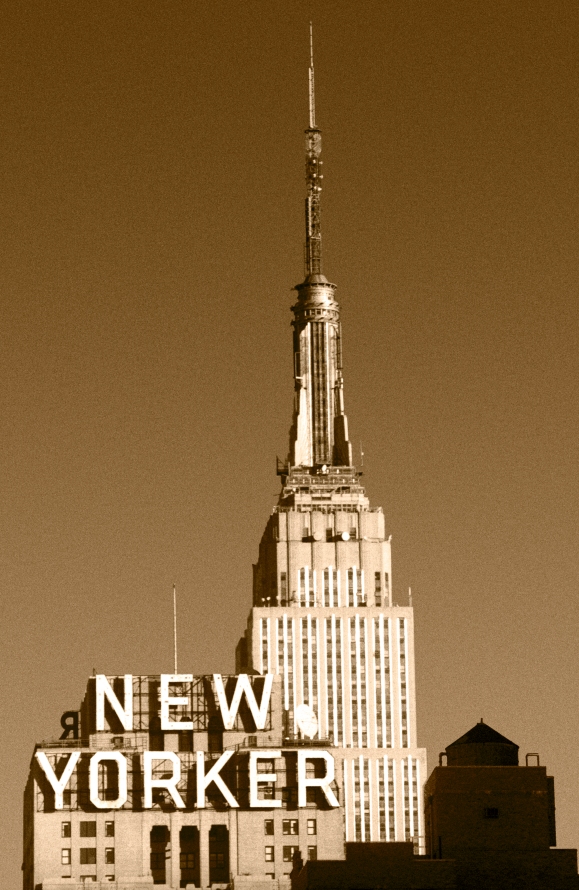
empirestateandnewyorkersign


“I Just Love Landscapes,” The Positive, The Camera Club of New York Official Members’ Newsletter, April, 1999

Henry Barnard always intrigued me.  I would watch him tirelessly printing and toning his many prints very early in the morning and very late in the evening, and I would wonder what he was doing with all those prints.  When I finally got up the courage to ask him, he told me the most remarkable story.  Henry is one of those hardworking New York street vendors.  Here is his story in his own words.   CL

It is one of those things you’ll never forget.  Not that it would be that important to anyone else.  But it made a big difference to me.  Let me start at the beginning.  The very first time I took my stuff out, I went to Madison to sell in front of a bank.  I had seen other photographers selling there, so I decided to give it a try.  But what happened was the banker came out and said, “You know, you’re doing something illegal.  I’ve called the police.  They should be here any minute.”  This made an impression on me.  I grabbed my stuff and was around the corner and out of site in a twinkle.  I remember running in the direction of 5th Avenue and sitting on one of those long benches they have on the park side.

I was just sitting there with my heart still pounding when I got the idea of going over to the Met.  I had seen artists there as well.  So I picked up my stuff and went to the museum and sure enough, there they were, a bunch of artists and vendors in the tree line in front of the Met, as well as extending beyond the parameter of the museum along the stone wall that runs to the street light on 79th Street.  I didn’t have a real display at the time, just propping the stuff up against a wall or whatever was available.  What was available here was that stone wall running to the street light.  There were many artists along the wall but there were a few open “spots.”  So I propped a dozen or so matted photographs, encased in a protective clear plastic sleeve, up against the wall.  Unfortunately, about every five minutes, a few of them would blow over haplessly, and I would jump off the ledge of the wall to put them back.

It soon became clear to me that just leaning such a flimsy object against the wall in such a windy environment was not working at all.  And what was worse, no one paid any attention to my stuff.  Anything right on the ground was ignored in favor of artwork on any sort of display – evidently no one wanted to buy from off the ground.  That was taboo.  After sitting there for the better part of three hours with my pictures getting blown all over the place and no one paying the slightest attention to my things, I decided to call it a day.

But I was not defeated.  I had seen the experienced vendors had cardboard displays that they taped their pictures to.  The cardboard displays were in turn taped to the ground.  These displays were solid as a rock, whether the wind blew or not.  Even better, they were getting plenty of attention while my stuff was swirling in the wind.  This brought me to Pearl Paint the next day, where I found some reinforced cardboard that was about the right size.  I bought a bunch of these and made some pyramid-type displays fashioned after what I had seen.  I also bought a nice wooden print stand made in Italy.  So I was ready for the next weekend.  Ready, with high expectations.

Despite these expectations, it rained on Saturday.  But Sunday was a pearly blue day.  Everything you could ask for.  I had noticed that on Sundays, artists also set up on the north side of the Met – an area that was nicer than the wall where I had been – so that is where I went with my new cardboard displays, my Italian print stand, and my pictures.  There was one spot left when I got there around 1 o’clock – I subsequently learned that it was unheard of for a spot to be still available that late in the day.  I proudly set up my cardboard displays, taped them to the ground, and then taped a half dozen pictures to them.  I also set up the elegant wooden print stand with another dozen or so pictures and the silent invitation to come and see.  When it was all up, I stood back with obvious self-satisfaction.  It was solid – no more pictures blowing in the wind…an attractive and clean presentation in fact.

I can still remember the pleasure – no, not pleasure, the fascination – I experienced simply watching people look at my stuff.  When someone looked in a certain captivated way, as if they had seen something that had unexpected delight for them and held them, almost involuntarily, that was virtually a transcendental moment for me then, in the early days of selling photographs when I had a certain innocence or maybe purity.  I still do experience this wonderful kind of pleasure but sadly with nowhere near the same intensity as in the early days when showing my stuff was such a novelty.

But that afternoon, the number of people who even just stopped to look at my things were far and few between, and as the minutes grew into hours and the afternoon began to wane, my feeling of dejection was growing larger and larger even as  the light was growing dimmer and dimmer.  Others in front of the Met had sold, sold all afternoon in fact, to my envy, but I had sold absolutely nothing, not even close – and this was my best stuff, prints I had slaved over, prints I was proud of!  (I would later learn that this lacerating confrontation with the ego was a big part of being able to sell photographs, that it would never go away, that it would never get any easier, and that many who try selling their own artwork, perhaps many much more talented than I, succumb to it, this brutal attack on the ego.)  And now there was only perhaps a half hour of good light left.  Yes, there was only about a half hour of good light left – when it happened.

What I remember – and will never forget, ever – was that she was a very large jolly type of woman full of exuberance.  That type bursting with life in sync with her oversized proportions.  She had in toe a husband who was a thin reed of a man, way beyond inconspicuous, as well as a tiny waif of a daughter.  The husband and daughter were like two pebbles strung to a virtual maelstrom blowing past the Met in the form of this gigantic person, a force of nature.

Even from a somewhat dazed state of mind from dejection, I could not help but hear her emphatic declaration, “I just lllllluuuuuuvvvvvv landscapes,” as she rifled through the prints in the Italian print stand with obvious relish, while clutching one print in her free, meaty left hand – a good sign.  When she finished, she asked the daughter if there was one she liked, and the daughter went through the print stand once again, but timidly, carefully, and finally, after excruciating deliberation – and a great deal of silent agitation on my part, I can tell you – settled upon yet another landscape, a picture of a wooded stream in Vermont lit up by a shaft of light on white water.

They were Midwesterners, and forthright and honest as the day is long.  The mother asked the price of the two pictures and paid without dickering.  And so, in just a matter of minutes, no more, I had made my first sale of a hand-made, darkroom photograph – no, two photographs! – to these three unlikely strangers who changed my landscape forever.

Postscript to this article:  There would follow 13 years of selling my darkroom prints in five different states including New York, New Jersey, Pennsylvania, Connecticut, and Rhode Island, with many photography awards along the way, perhaps reaching a zenith winning “Best in Show” at an art show sponsored by the Newport Artists Guild in Newport, Rhode Island, a far stretch from the humble beginnings in front of the Metropolitan Museum of Art.   But none of the experiences over this 13 year span ever equaled the intensity – one might even proffer the word “miracle” – of that very first sale to three total strangers who happened to be visiting New York, a city where dreams do come true.

Manhattan, A Photographer’s Journey by Henry Barnard

Nuclear Winter

68_Statue silhouette black flat

The New START (Strategic Arms Reduction Treaty) was signed in 2011, replacing START 1, and runs until 2021.  It limits the number of warheads of the US and Russia to 1550 each. It’s interesting to try to imagine what the United States would turn into if 1550 nuclear warheads were to hit their target here.  These modern warheads are not comparable to the two nuclear bombs dropped in WW2, which are puny in comparison.  The modern warheads are much more powerful – some, for instance, more than 3000 times the explosive capacity of the bomb dropped on Hiroshima.

Major targets are assumed to be hit with not just one but multiple warheads to ensure that at least one warhead gets through.  So it is safe to assume that all major cities would simply be obliterated, given the magnitude of these weapons, leaving intense radiation in the surrounding area.  Most of the smaller cities would also be hit, creating more radiation zones.  All the strategic military sites would be targeted, of course, as well as major industrial sites, producing still more radiation zones.  Basically, every missile that struck would create a large radiation zone where it would be hazardous for humans to tread, perhaps for decades.

The electrical grid would be destroyed so that there would be no power and no electricity.  All 61 of the nuclear power plants in the US, without power, would no longer be serviced with the necessary cooling process and so they would all have unstoppable melt downs, creating radiation zones around them of approximately 50 miles in every direction – and these radiation zones would be permanent and very lethal.

Food distribution would simply end; and most of the population would not know how to grow food and therefore would be unable to feed itself, so that perhaps 90% of the population would die from starvation within a few months, or even sooner, depending on when their existing food supplies run out.  Tap water would be a thing of the past, so that finding and purifying water would be a major and constant challenge (the human body can be in starvation mode for prolonged periods of time and can go without food entirely for up to 3 weeks, but cannot do without water for more than 3 or 4 days at most).

There would be no government and no law and order, and those who managed to survive the initial attack would quickly drop the thin veneer of civilization and turn into savages willing to do anything for food and water.  There would be no hospitals or medical services, and cadavers would not be buried, as there would be no one to bury them. All the radiation would of course have an enormous impact on wildlife as well as the once fertile soil.

There would be small pockets of survivors in the remote countryside far removed from urban areas and from the various radiation zones.  These rare individuals would survive because they just happened to know how to survive in the wild, like the fabled mountain men of the Old West.  They would also be able to survive because they would be able to  separate themselves and stay far away from the desperate.

The survivors in the northern states would consider their predicament facing harsh winters without heat.  Many would attempt to migrate to the south to avoid severe winters.  But this trek would be on foot, as the roads would be a shamble and many sections would simply be destroyed by missile strikes.  And the trek would have to give a wide berth to urban areas, as these would be a radiation hazard.  One option for survivors in the northern states like New England, facing the difficult urban corridor from Boston to Washington, might be to go north instead, to Canadian communities that were still intact.

All of the above would also take place in Russia.  It would start in just 20 minutes and be over in a matter of a few hours.  To the rest of the globe, these two countries would be considered no-go zones to be avoided at all cost.  The world economy would collapse, so that destitution would be the rule rather than the exception.

Nuclear Weapons Around the World

Map of the World’s 17,000 Nuclear Weapons

North Korea — What to Expect

On the Brink

Crimea

European Union (EU) and Tariffs

What do you get for a one dollar contribution? My gratitude.

If you enjoyed the post, you can help me keeping blogging along with just a one dollar contribution. You can contribute more by increasing the quantity — each increase by 1 is an additional dollar. Thanks for your support in this blog-eat-blog world.

$1.00


Not Even A Whisper

First Love
First Love

Vulnerable alone.

So the mind casts back in time
And finds you.

But there is no face,
And no hand,
No heart.

What I would do
For a few moments together…
Just a few.

What would I say?
I miss you, oh, I miss you so – yes.

I miss the we that we were,
Once upon a time…
Stars in my eyes.

I would, yes I would,
Cling to those moments
Before they slip away.

But there are no moments,
Flown long ago…
Not even a whisper.

Vulnerable alone.

All Poetry — Henry Barnard

My Story

What do you get for a one dollar contribution? My gratitude.

If you enjoyed the post, you can help me keeping blogging along with just a one dollar contribution. You can contribute more by increasing the quantity — each increase by 1 is an additional dollar. Thanks for your support in this blog-eat-blog world.

$1.00

Where Is Our Leader?

Great civilizations, no doubt, can rise or fall depending on the presence or absence of an effective leader at a critical juncture.  Few would doubt that Franklin Delano Roosevelt was the perfect leader to face a relentless depression and a terrifying world war.  His leadership still rings down through the ages with the echo of his forever familiar words, “Only thing we have to fear is fear itself” and “A date which will live in infamy.”  But what if there had been no FDR to face the double barrel perils of a depression and a world war?  What might have been the darker fate of mankind then?  What might it be today?

Of course we have many politicians who pledge to fight for seniors.  And defending the middle class is the stock and trade of the “successful” politician – that is, those who get re-elected.   And one must not forget the tough stance on keeping our military strong.  All these positions are good to go for any politician who intends to survive elections, for woe to those who take a stance that in any way undermines the interests of seniors, the middle class, or the military.  We all know this to be true.

But where is the politician who is willing to tell the public that, at over 21 trillion dollars and escalating, we have way too much government debt, that the government borrows 40 cents for every dollar it spends, and so it is time to finally pay down the bill.  It is time to actually raise taxes, not just on the super rich so that it will not impact the average Joe and his vote, but across the board – raising your taxes and mine?  That leader is nowhere to be found.

And where is the politician who is willing to tell the public that our war on drugs has been a miserable failure, that, as a result, the prison system has become bloated and is unsustainable, and so it is time to end this second Prohibition, which has failed just as miserably as the first?  It is time to legalize and regulate many of these drugs; time to develop humane health programs for the myriad addicts; and time to reduce the prison population by early release for trivial victimless crimes along with jobs training to minimize recidivism.  That leader is nowhere to be found.

And where is the leader who will be honest with the public and confide that we are on a suicidal descent into a dangerously warming planet, and so it is time to get serious about the reduction of carbon emissions despite the economic consequences, that is, time for a carbon tax, if not serious restraints on the use of all fossil fuels, which will no doubt mean job losses and reduced GDP?  That leader is nowhere to be found.

And where is the leader who, instead of demanding even more military spending to enhance our “readiness,” is willing to be honest with the public and confide that world events are not totally under our control despite the imposing size of our military, and that, more often than not, what really works better than the blunt hammer is the deft diplomatic negotiation where there is true give and take on both sides — not just theirs?  And, sadly, this deft diplomacy has been sorely lacking.  That leader is nowhere to be found.

And where is the leader who will level with the American people and tell them that the entitlement programs have to be reformed to make them financially viable by pushing out the eligibility age to at least 70, increasing the Social Security tax significantly, and introducing means testing to reduce or eliminate these benefits for the well to do who can get by without them?  That leader is nowhere to be found.

And where is the leader who will tell the public that the national government in conjunction with state governments must undertake an expensive infrastructure program to repair or replace roads, bridges, and waterworks because these assets have been seriously neglected, and this monumental effort will necessitate even more tax increases?  That leader is nowhere to be found.

And where is the leader who will take on the apparent economic inequity between races and particularly focus on the lack of opportunity for pockets of poverty in the inner city as well as routine police mistreatment of minorities, particularly Afro-Americans?  That leader is nowhere to be found.

And where is the leader who will shine a light on the adverse effects of decisions like Citizens United, and inform the public that the national government is now the instrument — bought and paid for — of the highly financed lobbyist?  That there is now an urgent need to put caps on campaign contributions, to roll back the definition of corporations as people, and to even consider term limits for congressmen in order to restore some semblance of democracy to our elected officials instead of what we have today – a plutocracy and a government controlled by special interests.  That leader is nowhere to be found.

And where is the leader who will finally unravel and resolve the immigration mess by 1) identifying current illegal aliens who do not have a felony conviction, 2) offering them a reasonable pathway to citizenship after a suitable grace period, and 3) then be in a position to identify and deport new illegal aliens so that this problem does not continue in it chronic form and does not re-occur once it has been resolved.  That leader is nowhere to be found.

And where is the leader who will tackle the demise of the middle class and the swelling of the ranks of the poor, with the wealthest receiving an ever increasing proportion of the national wealth.  Never before has the republic seen such a skewing of the class structure.  Forty-three million citizens are now on Food Stamps; 1 in 5 American children do not get enough food to eat, and forty-five million live below the poverty line or 12.7%  of the population.  The richest 1% now own 38% of the total wealth of the country; the richest 20% own 87%; but the lower 50% own a meager 1.1%.  Where is the leader who will reverse all of these trends, reduce the number on Food Stamps, reduce the number of Americans living below the poverty line, broaden the ranks of the middle class, and require the richest Americans to provide the economic resources necessary to boost the livelihood of the impoverished and declining segments of our population?  That leader is nowhere to be found.

Government debt, a failed war on drugs, a prison system bursting at the seams, global warming, over reliance on the military and an absence of any real diplomacy, unsustainable entitlement programs, a ravaged national infrastructure, economic inequality between races and the blight of the inner city, lobbyist and corporate control of government, a broken immigration system, and a deteriorating class structure with entrenched poverty – these problems will not be solved without strong leadership.   But what if they are not addressed?  What if there is no FDR to save us this time?

LBJ

A Speech Like No Other

What do you get for a one dollar contribution? My gratitude.

If you enjoyed the post, you can help me keeping blogging along with just a one dollar contribution. You can contribute more by increasing the quantity — each increase by 1 is an additional dollar. Thanks for your support in this blog-eat-blog world.

$1.00


European Union (EU) and Tariffs

Trump’s comment that the EU is a “foe” from an economic point of view made me look into our trade relations with Europe.  It turns out that we have a consistently large trade imbalance with the EU every year.  Most people are aware of the gigantic trade imbalance with China that has persisted now for decades, but may not be so aware of this problem with the EU.  Here are the numbers for 4 years:
2014 276.3 billion
2015 271.9 billion
2016 269.5 billion
2017 283.3 billion
So what the above means is that, on a net basis, for those 4 years, over a trillion dollars has left our country and gone to the EU — quite literally, on a net basis, the US is 1 trillion poorer and the EU is 1 trillion richer.  Why is this happening?  Why is the US selling to Europe so much less than we are buying from them when the US, by any measure, has very good companies and very competitive products?  I suggest the problem occurs because of EU tariffs.  Actually, tariffs are almost a definition of what the EU really is.  For states that are members, the EU is a genuine free trade zone — there are no tariffs between member countries, that’s the whole point.  But for the rest of the world, including the US, the EU uses prohibitively high, protectionist tariffs to shield domestic industries of member states from foreign competition.
It will be interesting to see what impact there will be on the trade balance between the US and the EU if a genuine free trade agreement is put in place where there are no tariffs at all on either side so that American products will be unimpeded by EU tariffs and their products unimpeded by our tariffs — a completely level playing field.  Who knows — we may even see a trade surplus on the US side of the ledger.

What do you get for a one dollar contribution? My gratitude.

If you enjoyed the post, you can help me keeping blogging along with just a one dollar contribution. You can contribute more by increasing the quantity — each increase by 1 is an additional dollar. Thanks for your support in this blog-eat-blog world.

$1.00

Crimea

If you look up the demographics of Crimea, you’ll discover that 65.3% of the population is Russian and only 15.7% Ukrainian (based on the 2014 census) — those are the facts.  Russians outnumber Ukrainians over 4 to 1.  Yet the Russia-bating press in the US keeps calling the referendum held in the Crimea, which voted overwhelmingly to rejoin Russia, illegitimate and somehow manipulated.  Actually, given the demographics, it is hard to see how the referendum could have produced any other result.

Furthermore, that Crimea and the Ukraine were ever joined in the first place does not have much history behind it.  It was an afterthought of Khrushchev that stuck the two areas together (originally the Soviets had the Crimea as a separate entity).  On the other hand, there is a lot of history tying the Crimea to Russia, going back to 1783 when the Ottoman Empire ceded it to Russia, that is, roughly 150 years ago (i.e., just a few years after the United States itself became a country in 1776).

Based on the current demographics of Crimea, with a huge Russian majority as stated above, it would actually be undemocratic if Crimea remained a part of the Ukraine instead of rejoining Russia. But the US media would have us believe this Crimea situation was nothing more than outrageous Russian “aggression”.  I disagree.  What it tells me is that because of the anti-Russia hysteria in the US, the US cannot bring itself to recognize a democratic process (the Crimea referendum) when it sees one.

Demographics of Crimea

North Korea — What to Expect

European Union (EU) and Tariffs

Nuclear Winter

What do you get for a one dollar contribution? My gratitude.

If you enjoyed the post, you can help me keeping blogging along with just a one dollar contribution. You can contribute more by increasing the quantity — each increase by 1 is an additional dollar. Thanks for your support in this blog-eat-blog world.

$1.00